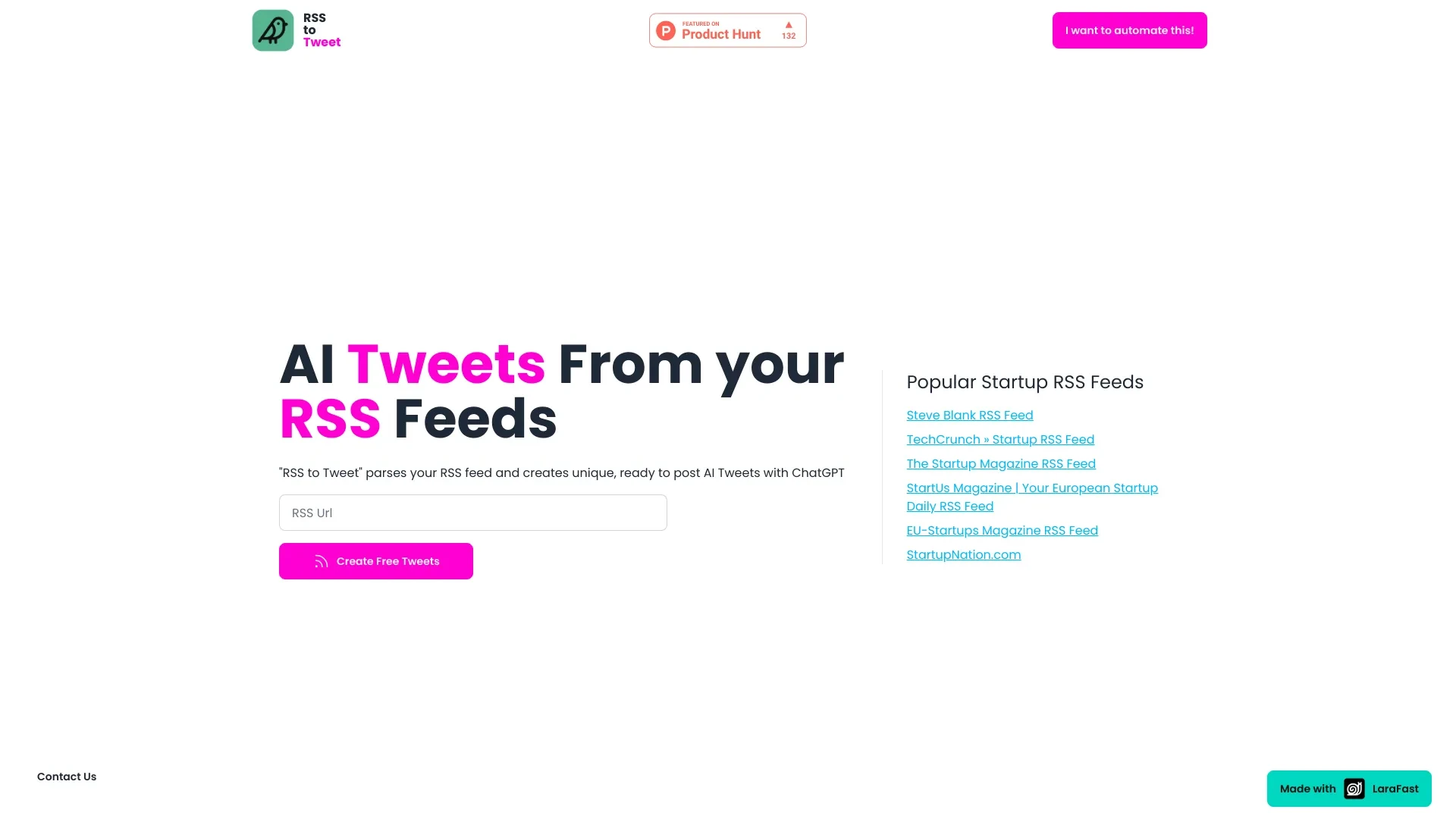

RSS to Tweet and ViralXPost both aim to simplify Twitter content creation, but they serve different needs. RSS to Tweet automates posting from RSS feeds to tweets for effortless updates, while ViralXPost focuses on AI generated viral tweets and threads with analytics for marketers. Both are web based and easy to adopt.
Automatically share blog posts on Twitter
Promote news articles through tweets
Enhance engagement on social media
Save time with automated content posting
Saves time on social media posting
Increases audience engagement
Simplifies content sharing
RSS feed parsing
Tweet generation
Customizable tweet options
Automatic sharing
User-friendly interface
Enhance social media engagement with viral tweets
boost brand presence and audience interaction
streamline the process of content creation
customize tweets for niche markets
Unlimited features available
no hidden costs
easy-to-use interface
Human-quality tweet and thread generation
multiple tone and style choices
brand customization options
time-saving content creation
engagement optimization
If your goal is simple, cost free automation that converts RSS updates into tweets, RSS to Tweet is the clear choice. If you need AI generated viral content with analytics and ongoing optimization for brand campaigns, ViralXPost provides more advanced capabilities at a subscription price. Choose RSS to Tweet for baseline automation and switch to ViralXPost when you want deeper engagement analytics and broader content customization.
RSS to Tweet is offered free with a one_time perpetual billing model, effectively making core automation accessible at no cost. ViralXPost operates on a freemium model with 0.00 price and monthly subscription for premium features. In practice, RSS to Tweet emphasizes accessibility and straightforward automation, while ViralXPost targets ongoing content optimization and analytics through paid plans. Both are web based and accessible to individuals and teams.
Explicit speed or reliability metrics are not provided. Both tools are web based and rely on standard cloud processing; ViralXPost includes analytics for measuring effectiveness, suggesting built in tracking, while RSS to Tweet emphasizes a stable automation workflow with a simple setup.
RSS to Tweet advertises an intuitive user interface and quick setup, letting users paste an RSS URL and choose tweet options. ViralXPost also markets a user friendly interface with AI guided content creation and tone style customization, designed for marketers. Onboarding is likely straightforward for both, with Tool A focusing on a fast start and Tool B emphasizing customizability and ongoing optimization.
Both are web based platforms. Tool A integrates RSS feed parsing with tweet generation and social media posting, while Tool B offers brand customization and analytics within a web interface for social media content creation.
Tool A emphasizes automation and simplicity but lacks explicit analytics and broad experimentation features. Tool B requires ongoing subscription for analytics and advanced customization, which may be more than some users need.