Sponsored by BrandGhost BrandGhost is a social media automation tool that helps content creators efficiently manage and schedule their social media... Visit now

DeepL versus DeutschDictionary

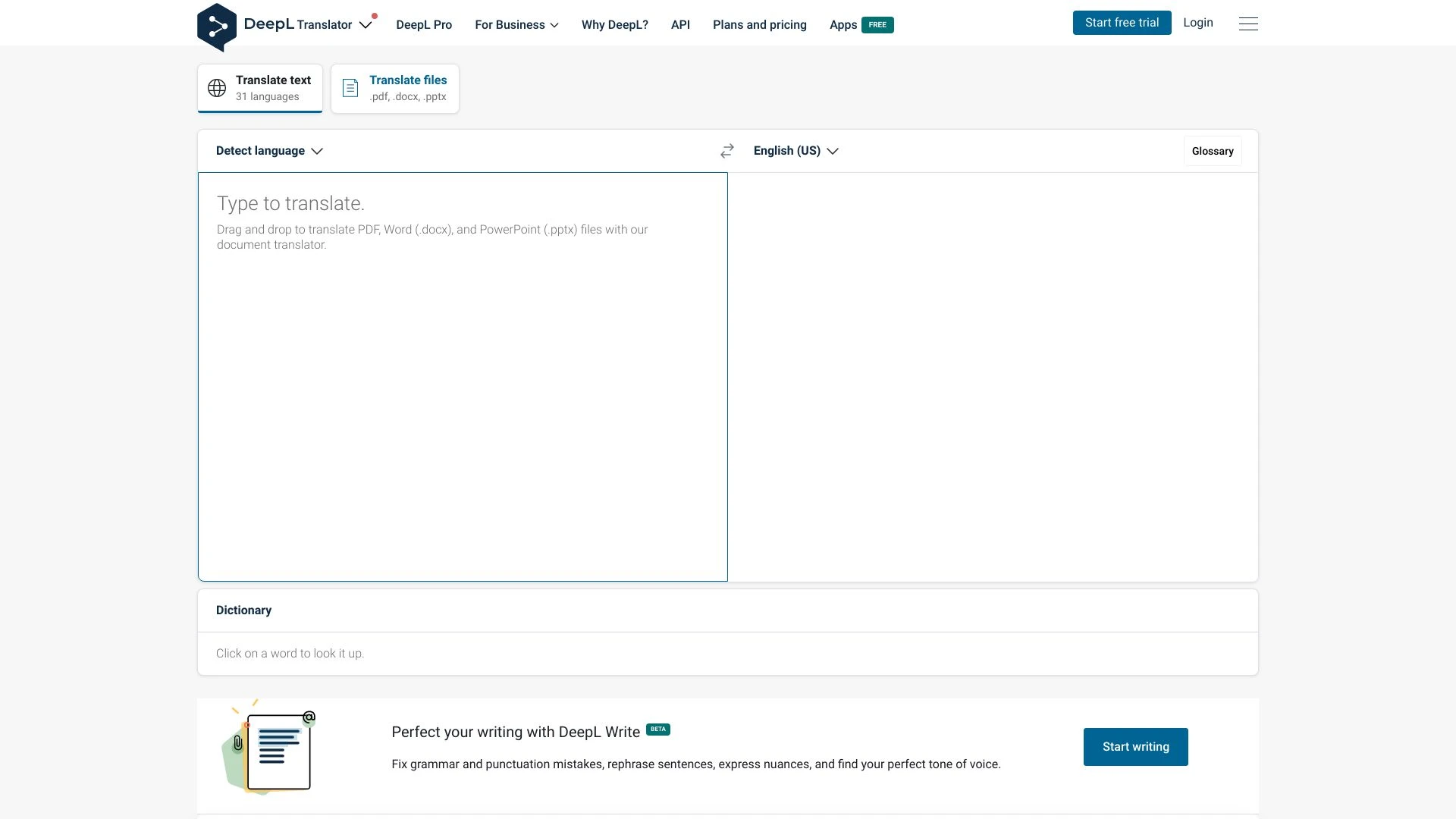
DeutschDictionary is an interactive German English dictionary designed for language learners, offering contextual translations and linguistic assistance. DeepL is a highly accurate translator that delivers instant translations for texts and documents across multiple languages, catering to individuals and teams.

DeepL vs DeutschDictionary Overview

Last updated: May 2026

DeepL

0

Ideal For

    Translating personal documents

    Facilitating multilingual team communication

    Translating educational materials

    Assisting language learners with accurate translations

Key Strengths

    High translation accuracy

    User-friendly interface

    Supports a vast array of languages

Core Features

    Highly accurate translation

    Instant document and text translation

    Support for multiple languages

    Drag-and-drop functionality for file uploads

    Daily use by millions worldwide

Ideal For

    Improve German vocabulary through contextual examples

    Learn verb conjugations for accurate sentence construction

    Enhance reading comprehension

    Prepare for language proficiency tests

Key Strengths

    Extensive database of translations

    Contextual examples for better understanding

    User-friendly interface

Core Features

    Over 1 million translations

    Contextual translations and example sentences

    Conjugation assistance

    Pronunciation by native speakers

    Daily updates of new words and translations

Popularity

Very High 207,700,000 visitors
Growing popularity
Very Low Unknown number of visitors
Growing popularity

At a Glance

If the priority is learning and vocabulary building in German English with rich contextual cues, DeutschDictionary is the better fit. For broad language coverage and high quality translations especially in business contexts, DeepL stands out, with Pro features addressing team workflows. The ideal choice depends on user goals, and many users may find value in using both tools to cover learning and translation needs.

Pricing and Subscription Plans

DeutschDictionary is listed as free with a one time billing option and consumption based access for certain features. This arrangement supports learners with no upfront cost while enabling access to core learning tools through consumption. DeepL uses a freemium model with optional monthly subscriptions for DeepL Pro features, targeting both individual users and organizations. Together these models reflect a spectrum from free learning oriented use to paid enterprise grade capabilities.

Performance Metrics

DeepL offers highly accurate translations and instant results for both text and documents, with a broad language scope and file upload capabilities. DeutschDictionary provides contextual translations, conjugation assistance, and native pronunciation, supported by daily vocabulary updates. Specific speed or reliability metrics are not provided, so practical expectations center on feature stability and platform availability.

User Experience

DeutschDictionary presents a user friendly interface focused on learning, with features like contextual examples and pronunciation from native speakers, making it suitable for beginners and tutors. The daily updates help maintain current vocabulary and examples, while verb conjugation guidance supports grammar practice. DeepL offers a clean, intuitive web interface with drag and drop for documents and text translation, plus availability on Windows and Mac, easing onboarding for teams.

Integrations and Compatibility

DeutschDictionary is accessible via the Web platform. DeepL provides a web interface and additional Desktop availability on Windows and Mac, with file upload capabilities for documents.

Limitations and Drawbacks

DeutschDictionary mainly supports learning oriented German English translations with learning aids, which may not cover large scale document workflows. DeepL Pro introduces a paid tier for advanced business features, which may be a consideration for teams with budget constraints.

Frequently Asked Questions

What is the main difference between DeepL and DeutschDictionary?
The key difference between DeepL and DeutschDictionary lies in their core use cases, pricing models, and feature depth. DeepL typically focuses on specific workflows, while DeutschDictionary offers broader capabilities suitable for different teams and scenarios.
Which is better for teams: DeepL or DeutschDictionary?
DeutschDictionary is often a better fit for growing teams that need collaboration, governance, and integrations, while DeepL can be ideal for individuals or smaller teams who want a simpler, more focused solution.
Is DeepL more affordable than DeutschDictionary?
Pricing depends on your usage and plan tiers. DeepL may offer a lower entry price, while DeutschDictionary can provide more value at scale with advanced features included in higher-tier plans.
Can I use both DeepL and DeutschDictionary together?
Yes, many teams combine both tools in their workflows to cover different use cases. Always review integrations and overlapping features to avoid paying twice for similar functionality.

Related Comparisons