Sponsored by BrandGhost BrandGhost is a social media automation tool that helps content creators efficiently manage and schedule their social media... Visit now

Eliott versus Soku AI

Eliott vs Soku AI Overview

Last updated: May 2026

Eliott

0

Ideal For

    Retrieving marketing analytics data

    Making data-driven campaign decisions

    Gaining insights from multiple platforms

    Assisting small teams with data analysis

Key Strengths

    Saves 10+ hours weekly

    Integrates with major marketing tools

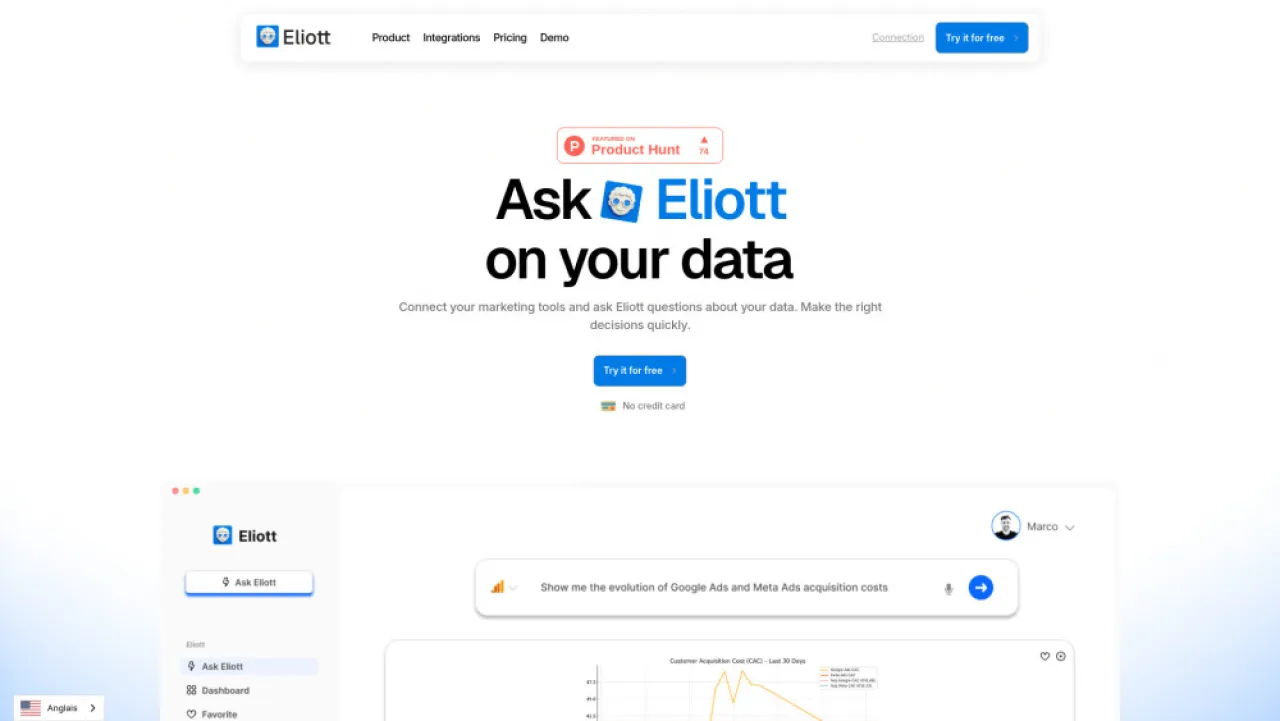
    No-code natural language queries

Core Features

    AI-powered insights: Faster decision-making

    Connects to marketing tools: Seamless data integration

    Supports natural language queries: Easy data access

    Provides strategic recommendations: Better campaign outcomes

    No code required: User-friendly experience

Soku AI

0

Ideal For

    Performance marketing: explain CPA spikes, surface wasted spend, and recommend where to reallocate budget for better ROAS

    SEO: identify keyword gaps vs competitors, pages that lost rankings, and position 4–10 pages that can be pushed into the top

    Social media: compare TikTok vs Instagram vs LinkedIn performance, find top-performing themes, and optimize posting times and formats

    Email / CRM: analyze which campaigns, flows, and segments drive the best open, click, and conversion rates and where to test next

Key Strengths

    Unified, cross-channel context so you don’t have to jump between dashboards and tools

    Minutes from question to diagnosis to action plan, instead of hours of manual investigation

    Turns reports into concrete to‑do’s: budgets to shift, campaigns to scale, pages to update, and tests to run

Core Features

    Natural language questions across channels, campaigns, audiences, content, and time ranges

    Root-cause analysis of performance shifts: spend changes, engagement drops, funnel leakage, attribution gaps, and creative fatigue

    Cross-channel comparisons: paid vs organic, channel vs channel, segment vs segment with consistent definitions

    Alerts and narrative summaries that explain anomalies in plain language plus recommended next steps

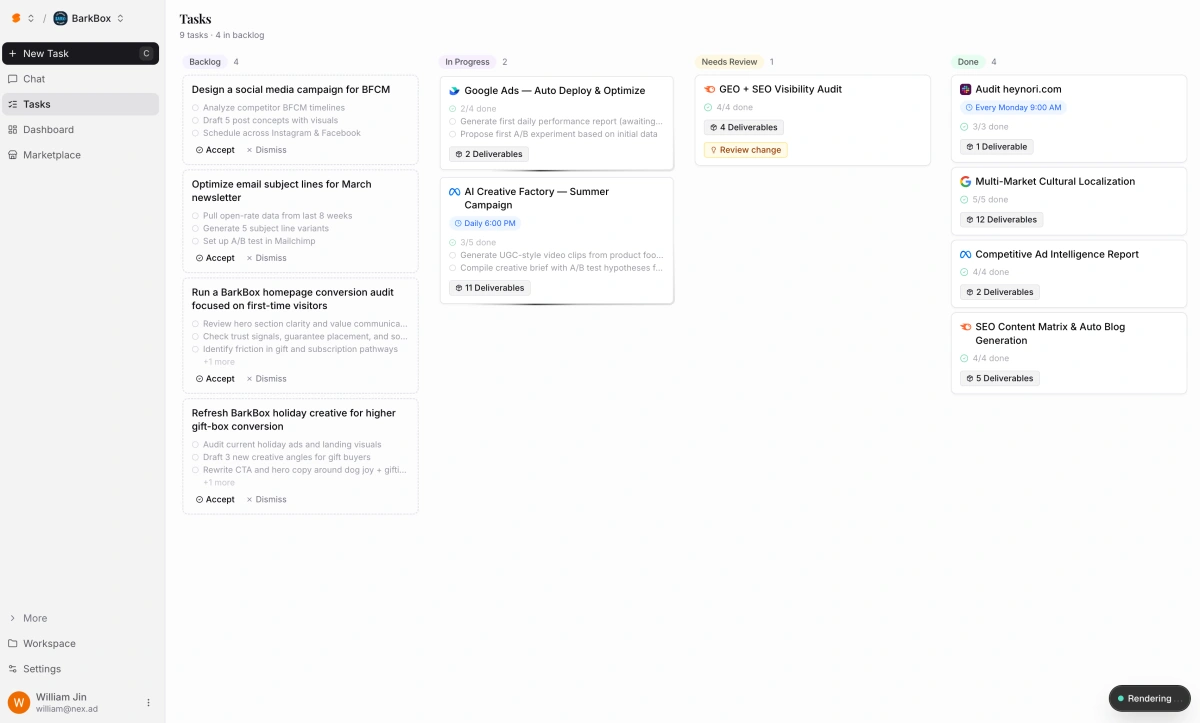
    Action plan generation for weekly recaps, campaign backlogs, scaling plans, and experiment ideas

Popularity

Very Low Unknown number of visitors
Growing popularity
Very Low Unknown number of visitors
Growing popularity

Frequently Asked Questions

What is the main difference between Eliott and Soku AI?
The key difference between Eliott and Soku AI lies in their core use cases, pricing models, and feature depth. Eliott typically focuses on specific workflows, while Soku AI offers broader capabilities suitable for different teams and scenarios.
Which is better for teams: Eliott or Soku AI?
Soku AI is often a better fit for growing teams that need collaboration, governance, and integrations, while Eliott can be ideal for individuals or smaller teams who want a simpler, more focused solution.
Is Eliott more affordable than Soku AI?
Pricing depends on your usage and plan tiers. Eliott may offer a lower entry price, while Soku AI can provide more value at scale with advanced features included in higher-tier plans.
Can I use both Eliott and Soku AI together?
Yes, many teams combine both tools in their workflows to cover different use cases. Always review integrations and overlapping features to avoid paying twice for similar functionality.