Sponsored by BrandGhost BrandGhost is a social media automation tool that helps content creators efficiently manage and schedule their social media... Visit now

Change Clothes AI versus I Have Nothing to Wear

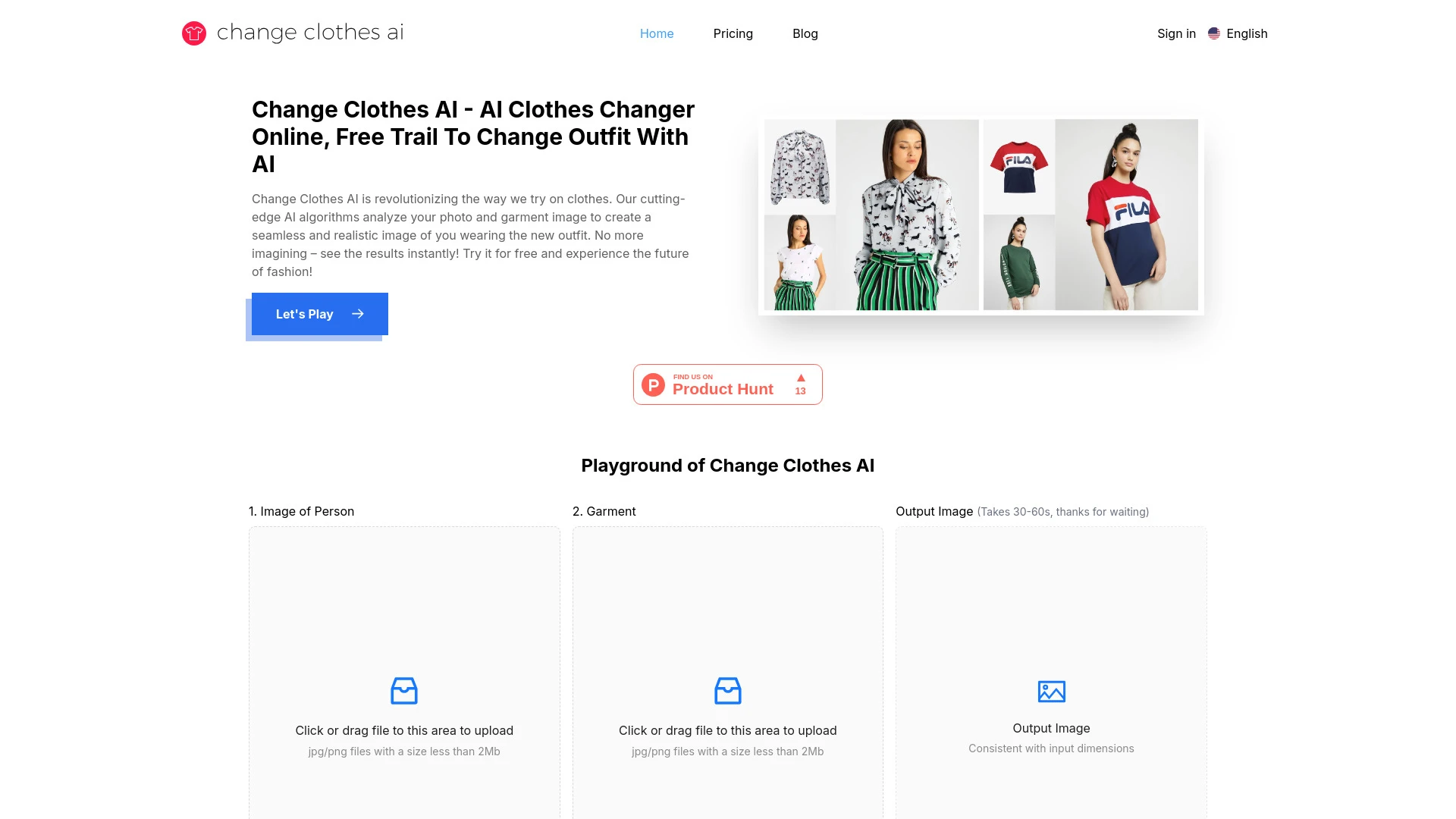
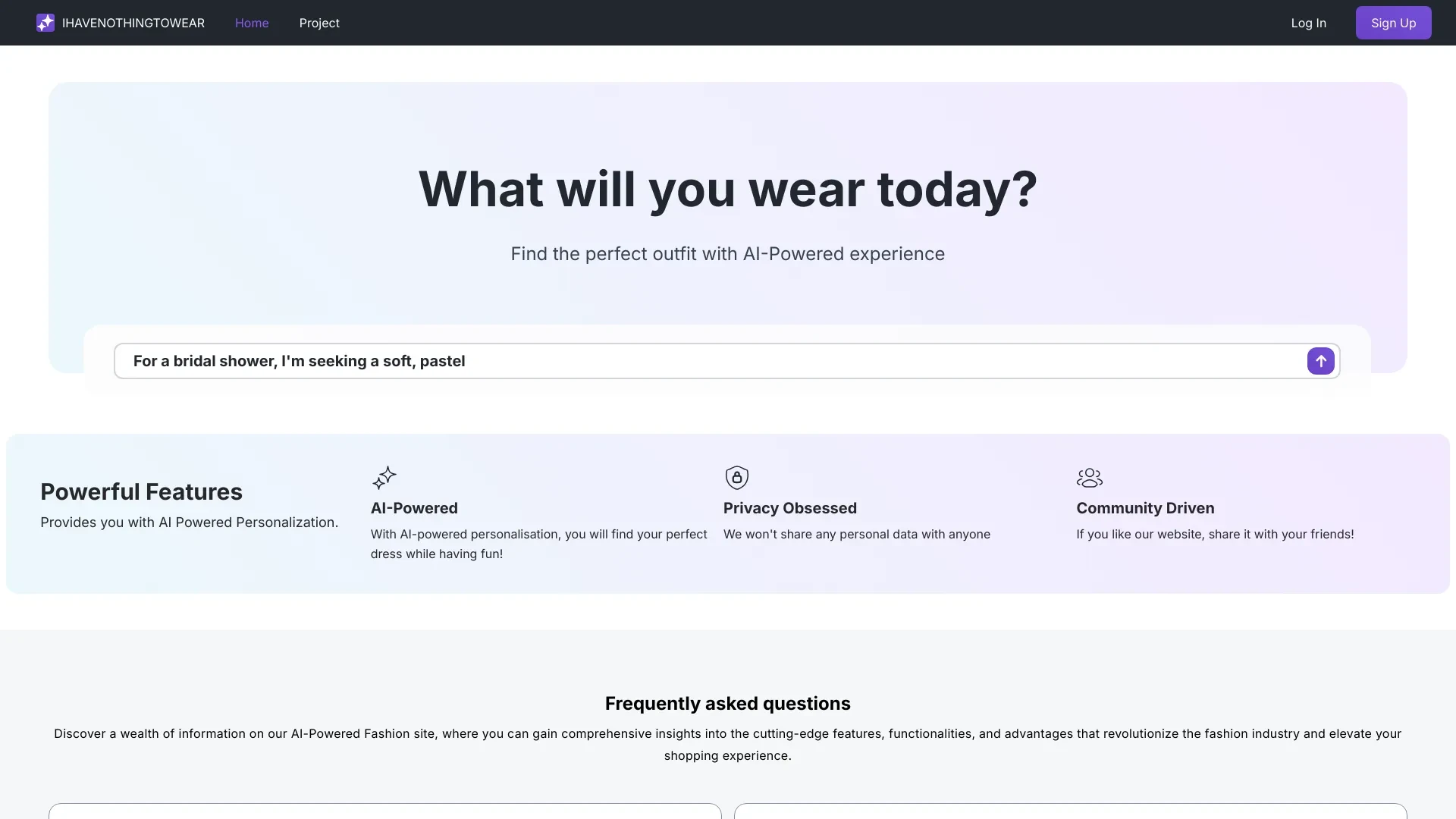
I Have Nothing to Wear and Change Clothes AI are web based fashion assistants that leverage AI to help users select outfits and visualize clothing. Tool A focuses on personalized outfit recommendations via an intuitive chat experience, while Tool B enables virtual try ons by swapping clothes in user photos. Both operate on a freemium model with monthly subscriptions, appealing to shoppers and style enthusiasts alike.

Change Clothes AI vs I Have Nothing to Wear Overview

Last updated: May 2026

Ideal For

    Visualizing outfits for online shopping

    Experimenting with various fashion styles

    Finding ideal attire for events

    Planning wardrobe for travel

Key Strengths

    Enhances online shopping experience

    Reduces return rates by ensuring better fit

    Offers personalized outfit recommendations

Core Features

    AI-powered outfit visualization

    Hyperrealistic wardrobe alterations

    Simple and user-friendly interface

    Free trial available

    Personalized shopping experience

Ideal For

    Choosing outfits for special events

    planning daily outfits

    getting style advice for different occasions

    finding the perfect dress for a night out

Key Strengths

    Personalized outfit suggestions

    saves time in outfit planning

    enhances fashion choices

Core Features

    AI-driven outfit recommendations

    personalized styling advice

    intuitive chat interface

    easy-to-use design

    occasion-based outfit suggestions

Popularity

Medium 22,500 visitors
Growing popularity
Very Low Unknown number of visitors
Growing popularity

At a Glance

If your priority is tailored outfit planning and ongoing style refinement, Tool A is the stronger fit. If your goal is visual experimentation and confident shopping through realistic try ons, Tool B stands out. In practice, a combined approach that uses Tool A for recommendations and Tool B for visual verification offers the most comprehensive fashion decision support.

Pricing and Subscription Plans

Both tools use a freemium pricing model with a 0.00 entry price and monthly subscription options. This setup provides easy initial access while enabling ongoing value as users expand their wardrobe exploration. Specific tier details are not disclosed, but the model supports casual users who may upgrade for more advanced personalization or additional features. The combination emphasizes accessible fashion experiences with scalable value.

Performance Metrics

No quantitative speed or reliability metrics are provided here. Tool A emphasizes real time engagement with AI driven chat for personalized recommendations, while Tool B highlights real time outfit generation and hyperrealistic wardrobe alterations, implying responsive visual feedback. Architecturally, both rely on AI driven pipelines to deliver interactive experiences, suggesting scalable inference for styling and visualization.

User Experience

Tool A offers an intuitive chat driven interface with personalized styling advice and occasion based suggestions, simplifying daily outfit planning. Tool B centers on a simple and user friendly interface that requires photo uploads and delivers real time visualizations, with a free trial to explore features. Both prioritize ease of use, with Tool A leaning into ongoing conversational personalization and Tool B providing immediate visual feedback for quick decisions.

Integrations and Compatibility

Both tools are Web based with no specific third party integrations enumerated in the available data, though Tool B explicitly supports online shopping use cases and visual experimentation within a fashion workflow.

Limitations and Drawbacks

Tool A may depend on user input quality and ongoing engagement to refine preferences. Tool B requires uploading photos which involves privacy considerations and may affect convenience for some users.

Frequently Asked Questions

What is the main difference between Change Clothes AI and I Have Nothing to Wear?
The key difference between Change Clothes AI and I Have Nothing to Wear lies in their core use cases, pricing models, and feature depth. Change Clothes AI typically focuses on specific workflows, while I Have Nothing to Wear offers broader capabilities suitable for different teams and scenarios.
Which is better for teams: Change Clothes AI or I Have Nothing to Wear?
I Have Nothing to Wear is often a better fit for growing teams that need collaboration, governance, and integrations, while Change Clothes AI can be ideal for individuals or smaller teams who want a simpler, more focused solution.
Is Change Clothes AI more affordable than I Have Nothing to Wear?
Pricing depends on your usage and plan tiers. Change Clothes AI may offer a lower entry price, while I Have Nothing to Wear can provide more value at scale with advanced features included in higher-tier plans.
Can I use both Change Clothes AI and I Have Nothing to Wear together?
Yes, many teams combine both tools in their workflows to cover different use cases. Always review integrations and overlapping features to avoid paying twice for similar functionality.

Related Comparisons