Sponsored by BrandGhost BrandGhost is a social media automation tool that helps content creators efficiently manage and schedule their social media... Visit now

Cloud Contracts 365 versus Dropbox Sign

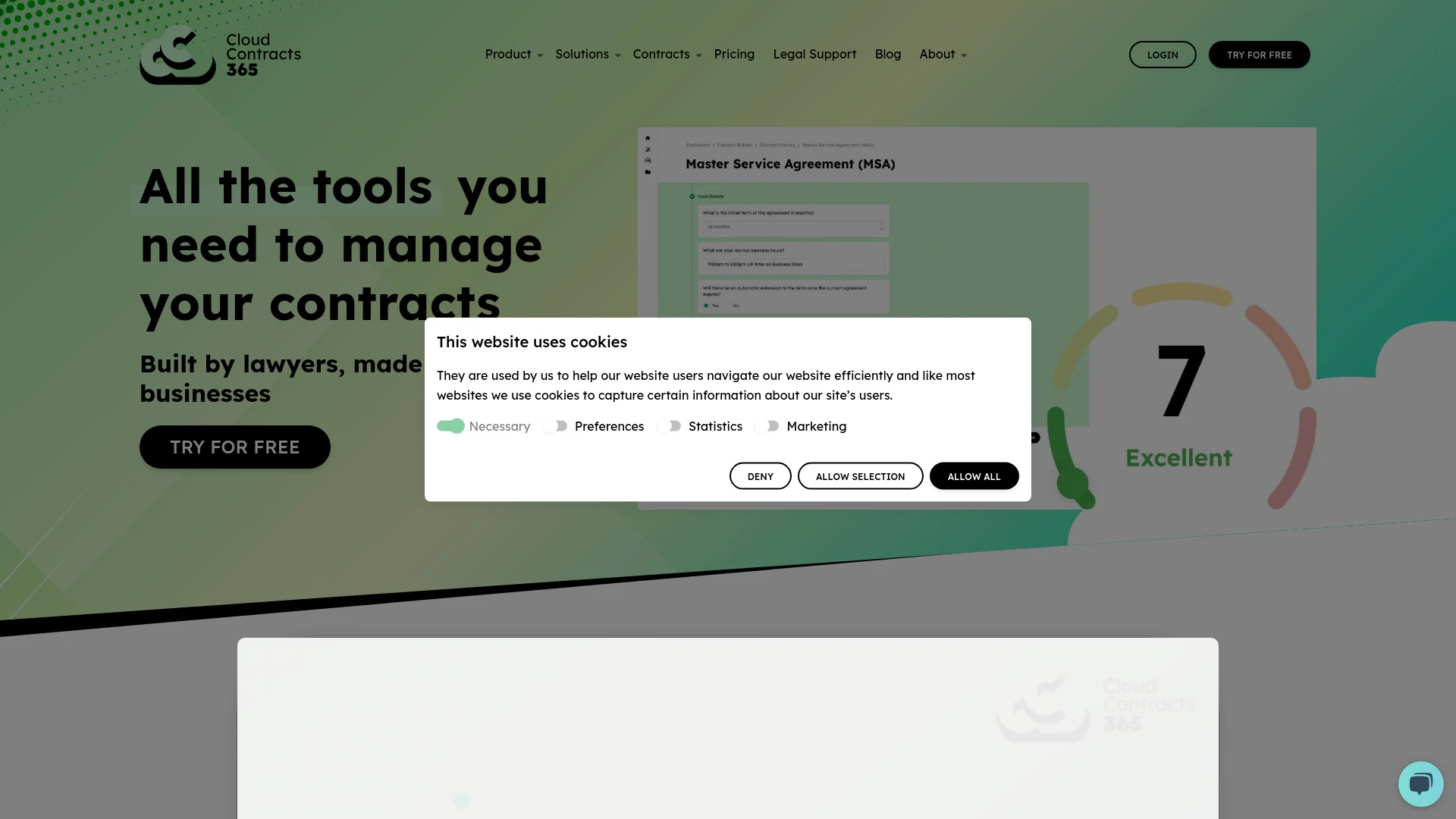
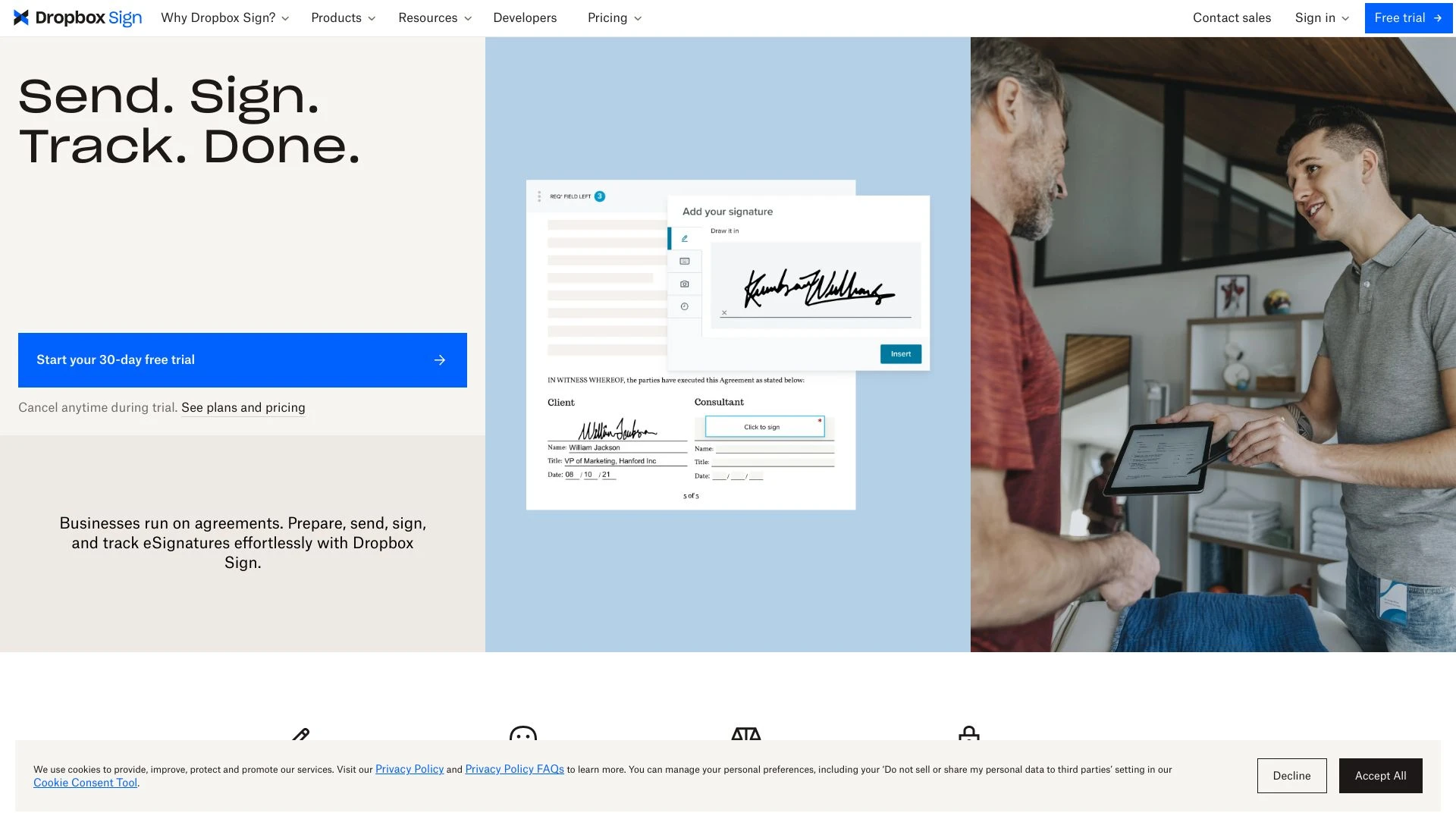
Dropbox Sign, launched in 2012, focuses on electronic signatures, enabling seamless document signing for businesses and individuals. Targeting professionals seeking efficiency, it integrates with various applications. Cloud Contracts 365, launched in 2020, offers contract management and e-signature capabilities for enterprises, emphasizing compliance and collaboration. Both serve distinct yet overlapping markets.

Cloud Contracts 365 vs Dropbox Sign Overview

Last updated: March 2025

Ideal For

    Accelerate sales processes

    Enhance organizational contract management

    Create legal documents swiftly

    Optimize contract workflows for tech teams

Key Strengths

    Improves contract processing speed

    Reduces legal risks

    Enhances team productivity

Core Features

    Streamlined contract creation

    AI-powered contract review

    Lifecycle management

    Integrated e-signature tool

    Risk summary generation

Dropbox Sign

0

Ideal For

    Sales contract signing

    Hiring documentation for HR

    Startup funding agreements

    Financial service client onboarding

Key Strengths

    Accelerates contract signing process

    Reduces paperwork and storage needs

    Enhances compliance with legal standards

Core Features

    Sign documents digitally

    Create and manage electronic signatures

    Generate reusable templates

    Fill and sign PDFs

    Comprehensive document management

Popularity

Very Low Unknown number of visitors
Growing popularity
Very High 3,700,000 visitors
Growing popularity

At a Glance

Dropbox Sign excels in user-friendly e-signature features and seamless integrations, making it ideal for businesses prioritizing efficient document signing. In contrast, Cloud Contracts 365 offers robust contract management capabilities, suitable for organizations needing comprehensive contract lifecycle support. Pros for Dropbox Sign include ease of use; cons are limited contract features. Cloud Contracts 365's pros include extensive contract tools; cons involve a steeper learning curve. Choose Dropbox Sign for quick signatures and Cloud Contracts 365 for in-depth contract management.

Pricing and Subscription Plans

Dropbox Sign offers a free plan with limited features and paid tiers starting at $15/month for individuals, scaling up to $25/month for teams, with volume discounts available. Cloud Contracts 365 pricing starts at $10/month for basic features, up to $35/month for advanced options, also offering custom pricing for larger businesses. Both cater to varied business sizes, but Dropbox Sign can be more cost-effective for heavy use due to its higher tier benefits.

Performance Metrics

Dropbox Sign excels in speed with quick document turnaround, making it ideal for time-sensitive agreements. Cloud Contracts 365 offers superior accuracy through advanced tracking and version control, making it preferable for complex legal documents. Reliability benchmarks show both platforms are robust, but Dropbox Sign may outperform in high-volume scenarios, ensuring swift execution.

User Experience

Dropbox Sign offers a clean, intuitive interface with straightforward navigation, making it easy for users to create and manage documents. Customizability is robust, allowing for personalized templates. The learning curve is minimal due to user-friendly tools and ample support resources, including tutorials and FAQs. Cloud Contracts 365 features a more complex design, which may require time to master. Navigation can be less intuitive, but it offers customizable workflows. Support resources are adequate but not as extensive as Dropbox Sign’s.

Integrations and Compatibility

Dropbox Sign seamlessly integrates with apps like Google Drive, Salesforce, and Slack, enhancing workflows. Cloud Contracts 365 supports integrations with Office 365, DocuSign, and Zapier, promoting compatibility with various third-party platforms for efficient document management.

Limitations and Drawbacks

Dropbox Sign's limitations include restricted document formats and fewer customization options, while Cloud Contracts 365 may lack comprehensive integration features and advanced analytics. Workarounds include using third-party tools for format support and integration enhancements.

Frequently Asked Questions

What is the main difference between Cloud Contracts 365 and Dropbox Sign?
The key difference between Cloud Contracts 365 and Dropbox Sign lies in their core use cases, pricing models, and feature depth. Cloud Contracts 365 typically focuses on specific workflows, while Dropbox Sign offers broader capabilities suitable for different teams and scenarios.
Which is better for teams: Cloud Contracts 365 or Dropbox Sign?
Dropbox Sign is often a better fit for growing teams that need collaboration, governance, and integrations, while Cloud Contracts 365 can be ideal for individuals or smaller teams who want a simpler, more focused solution.
Is Cloud Contracts 365 more affordable than Dropbox Sign?
Pricing depends on your usage and plan tiers. Cloud Contracts 365 may offer a lower entry price, while Dropbox Sign can provide more value at scale with advanced features included in higher-tier plans.
Can I use both Cloud Contracts 365 and Dropbox Sign together?
Yes, many teams combine both tools in their workflows to cover different use cases. Always review integrations and overlapping features to avoid paying twice for similar functionality.

Related Comparisons